
Louisiana Police Blotter
Louisiana police blotter records are public documents kept by parish sheriffs and city police departments across all 64 parishes. You can search incident reports, arrest logs, crash reports, and warrant records from any parish sheriff or city police records division. Major cities like New Orleans, Baton Rouge, and Shreveport run their own police departments with separate records divisions. Louisiana's Public Records Law gives any adult the right to inspect these files. This guide shows you where to find police blotter records in Louisiana and how to request them from the right agency.
Louisiana Police Blotter Quick Facts
Where to Find Louisiana Police Blotter Records
Parish Sheriff's Offices are the main source for police blotter records in Louisiana. Sheriffs are the chief law enforcement officers in their parishes. Each of the state's 64 sheriffs keeps incident reports, arrest logs, and related records for their area. If an incident happened in an unincorporated part of a parish, the sheriff's office filed the report. The Louisiana Sheriffs' Association represents all 64 sheriffs and nearly 14,000 deputy sheriffs. Each Louisiana sheriff also serves as the official tax collector and chief executive of the court in their parish, making the sheriff's office a central hub for local public records.
Major cities operate their own police departments separate from the parish sheriff. New Orleans, Baton Rouge, Shreveport, Lafayette, and other large cities have police records divisions that handle blotter records for incidents that occurred inside city limits. If you are unsure which agency handled a specific call, contact both the city police and the sheriff. They can tell you who filed the report. Some jurisdictions overlap, so starting with the city police is the right first step for any incident inside city limits.
The Louisiana State Police handles crash reports for accidents worked by state troopers on state roads and highways. LSP is the statewide source for motor vehicle accident data in those cases. If a local deputy or city officer worked the crash, that record stays with their agency, not LSP. The Louisiana Commission on Law Enforcement does not store police reports, crash reports, or arrest records. To get those, contact the parish or city where the incident happened directly.
Louisiana State Police Crash Reports
The LSP Traffic Records Unit is the central processing point for crashes handled by state troopers. Reports are scanned and indexed for electronic access. You can buy crash reports at the LSP forms page online. Each report costs $11.50 online, plus a $2.50 processing fee and a 2.5% card fee. Accepted payment cards include Visa, MasterCard, American Express, and Discover. Reports from January 1, 2006 to the present are available for online purchase.
The LSP forms page provides access to report request forms, crash record search tools, and payment options for records maintained by the state police.
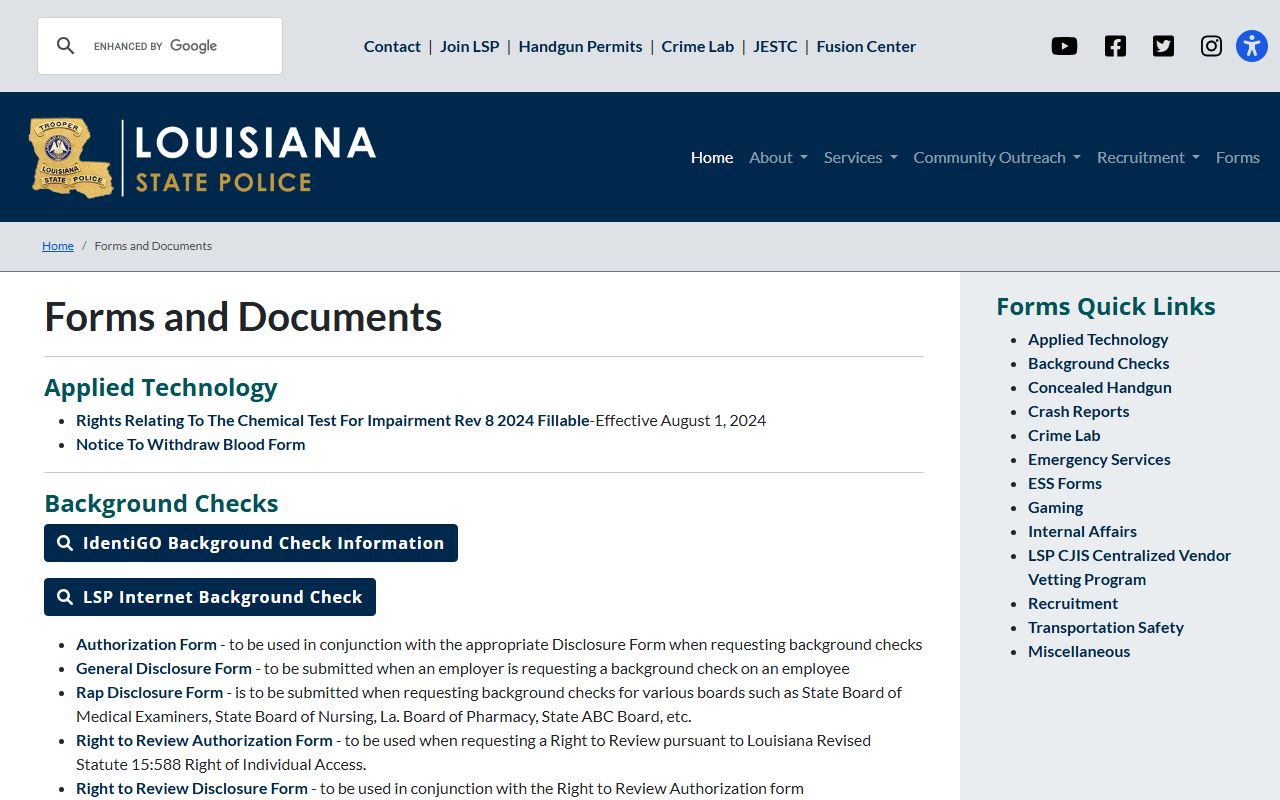
After purchase, you get an instant PDF download. Save the exchange sheet from the accident scene. It contains the report number needed to search online.
To search, you need either the report number or the driver's last name, the crash date, and the street where it happened. Allow 15 working days after the crash before requesting the report. Fatal crashes require a 60-day wait before photo requests are accepted. Fatal crash reports can only be purchased in person at an LSP Troop office. In-person crash reports cost $16.50. Troop offices accept certified checks, company checks, money orders, and credit cards. They do not take personal checks or cash. Use form DPSSP 3125 for in-person requests. Crash photo requests go to LSP.TrafficRecords@la.gov or by mail to P.O. Box 66614 (Box A-27), Baton Rouge, LA 70896.
The LSP Traffic Records Unit page explains the full process, including timelines, required forms, and how to submit crash photo requests by email, mail, or fax.
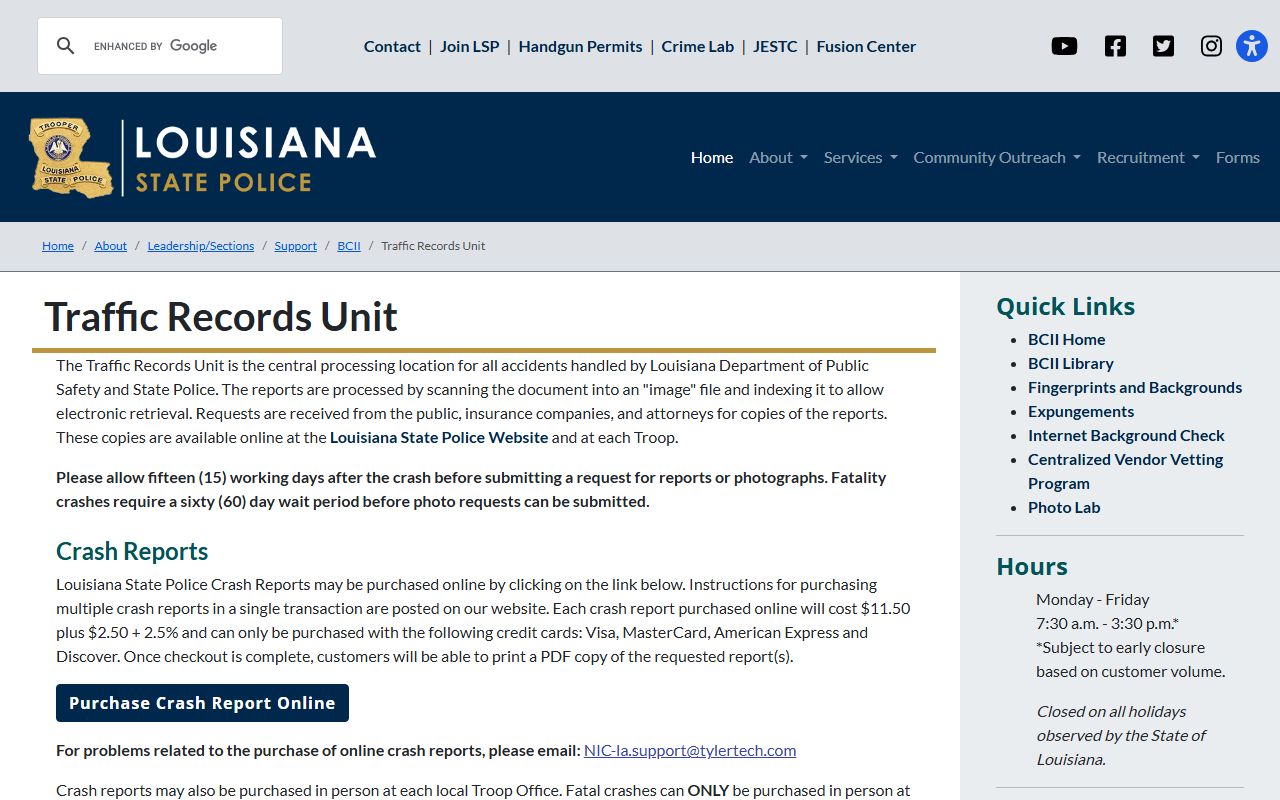
The Traffic Records Unit processes reports from troopers across the state, making it the largest single source of statewide crash data available to the public through LSP.
La. R.S. § 32:398 governs accident reporting in Louisiana. Drivers involved in accidents causing injury, death, or property damage over $500 must report the crash. Accidents inside city or town limits go to the local police department. Accidents in unincorporated areas go to the nearest sheriff's office or LSP station. Drivers in emergency evacuation zones have 72 hours to report.
Louisiana Public Records Law and Police Blotter Access
Louisiana's Public Records Law, La. R.S. § 44:1 et seq., defines public records as all books, writings, accounts, letters, maps, photographs, tapes, recordings, and papers prepared or held for the conduct of public business. Police blotter files, incident reports, arrest logs, and crash records fall under this definition when held by a public body. All Louisiana sheriffs and police departments are subject to this law.
Under La. R.S. § 44:31, any person of majority age may inspect, copy, or reproduce any public record during regular business hours. You do not need to explain why you want the records. You do not have to be a party to the incident or case. This gives broad access to most police records held by sheriffs and city police departments across all 64 Louisiana parishes.
La. R.S. § 44:32 sets the time and fee rules. Custodians must give immediate access to records not in active use. Written requests must receive a response within three business days. Fees must be reasonable and tied to actual reproduction costs. Most agencies charge between $0.25 and $1.00 per page for standard copies. Certified copies cost more. Research fees apply when staff must spend time compiling records for your request.
La. R.S. § 44:3 lists exemptions. Records tied to active criminal investigations may be withheld until the investigation closes. Juvenile records stay confidential and require a court order. Information that could harm an ongoing law enforcement operation may be held back. Internal personnel files are exempt. Once an investigation ends, many of those previously withheld records become public.
Note: If you are denied access to a police blotter record, ask for the denial in writing and the specific legal basis. You may have grounds to appeal.
Criminal History Records in Louisiana
Louisiana is a closed record state. Under La. R.S. § 15:587, criminal history records held by the Bureau of Criminal Identification and Information are not available to the general public. Only criminal justice agencies and a narrow set of authorized users can access another person's criminal history. You cannot request someone else's full criminal history through LSP or any public records office in Louisiana.
The LSP Background Checks page explains what types of record checks are available, who qualifies to request them, and how to use the Louisiana Applicant Processing System for fingerprint-based submissions.
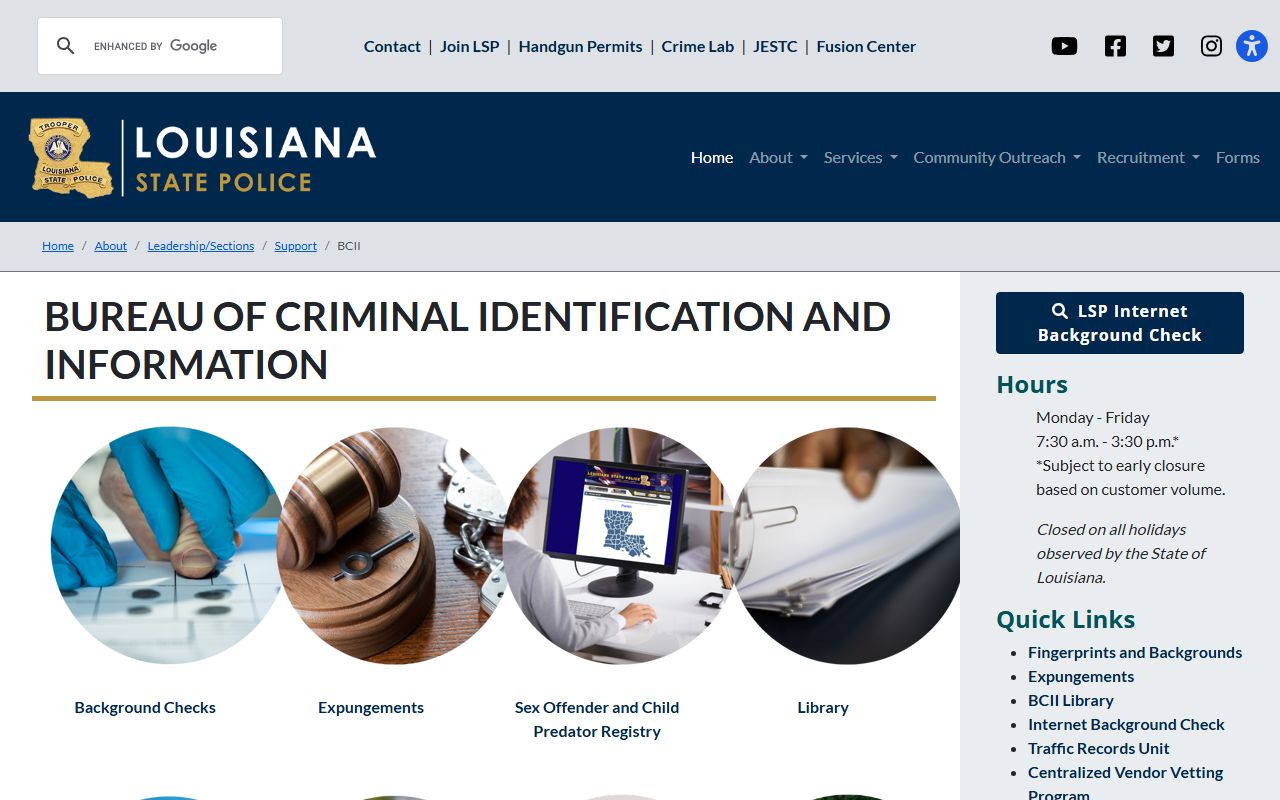
This page covers the Right to Review process under La. R.S. § 15:588, the fee schedule, and how LAPS fingerprint sites work across Louisiana.
Under La. R.S. § 15:588, you have the right to get a certified copy of your own criminal history record. This is called a Right to Review. As of December 1, 2024, the fee is $26 plus a $5 technology fee, totaling $31. You access it through the Louisiana Applicant Processing System (LAPS), which has fingerprint submission sites in communities statewide. Results can only be viewed on a computer, not a mobile device, and you have only one opportunity to view them due to security restrictions. Call LSP at 225-925-6325 for questions about the Bureau of Criminal Identification and Information.
How to Request Police Blotter Records in Louisiana
Most agencies require written requests for police records. Online portals are now the preferred method at many offices. The City of New Orleans uses the NextRequest portal at nola.nextrequest.com. Shreveport Police uses a similar system at cityofshreveportla.nextrequest.com. Calcasieu Parish Sheriff has an online portal at cpso.govqa.us. St. Tammany Parish Sheriff uses a GovQA system at stpso.govqa.us. Baton Rouge City has its own public records request page. These tools let you submit and track requests online without visiting in person.
Be specific when you submit a request. Include the date and time of the incident, the location, and names of parties involved. Add the report number if you have it. Broad or vague requests take longer to process and may cost more when agencies charge research fees. The more detail you provide, the faster the records division can find your file.
In-person visits work well when you need a document the same day. Bring a valid government-issued photo ID. Most sheriff's offices and city police records divisions can search by name, date, or report number. Some offices ask that you call ahead before visiting. Under La. R.S. § 44:32, agencies must respond to written requests within three business days. Complex files and audio or video recordings may take longer. LSP crash reports require 15 working days from the crash date before they are available to purchase.
When in doubt, send your request by certified mail. Keep a copy for your records. This creates a clear paper trail if you need to follow up or file an appeal. If you do not get a response within three business days, contact the records custodian by phone and reference the date you submitted your request.
Browse Louisiana Police Blotter by Parish
Each of Louisiana's 64 parishes has its own sheriff who maintains police blotter records for that area. Select a parish below to find local sheriff contact details, how to submit a records request, and what online tools are available in that parish.
Louisiana Police Blotter by City
Several major Louisiana cities operate their own police departments with separate records divisions. Select a city to find local police blotter resources and how to request incident records in that area.